In today’s digital world, everything you want to learn seems just a tap away. You type a few words, and YouTube gives you hundreds of videos—explaining math formulas, historical events, science experiments, or grammar rules. It feels fast, easy, and available 24/7. No doubt, it’s tempting.
But while technology has made information more accessible than ever before, it has also quietly introduced a challenge—a challenge we teachers are now facing in almost every classroom.
Many students have started depending solely on YouTube or other online platforms for understanding lessons. They believe that watching a 10-minute video is equal to attending a 40-minute class. But here’s something important to think about:
Is watching a video the same as truly learning? Is it a substitute for what happens in a real classroom with a real teacher?
Let’s explore.
The Classroom: A Place of Connection, Curiosity, and Clarity
Your classroom is not just a room filled with desks and chairs. It’s a space designed for interaction, engagement, questioning, and most importantly—growth. It’s a place where learning is not one-way, but collaborative. 
Here’s what your classroom offers that no video can match:
- Instant Clarification: Got a doubt? You don’t have to stay confused. Raise your hand, and your teacher will explain it in a way you understand.
- Engaging Discussions: You hear different perspectives from your classmates. You argue, agree, ask, and answer. That process deepens your understanding.
- Personal Attention: Your teacher watches how you respond, how you attempt answers, and how you react to new ideas. If you’re confused or struggling, they step in immediately.
- Real-Time Feedback: Made a mistake? Your teacher corrects it right away—before it becomes a habit.
- Adapted Teaching: Every teacher adjusts their teaching style based on the class’s needs. If 5 students are confused, the explanation changes—videos can’t do that.
YouTube: A Useful Tool, But Not a Teacher
Let’s be fair—YouTube is not the villain here. It can be incredibly useful when used the right way. It’s great for revisiting a topic, watching a visual demonstration, or hearing a different explanation.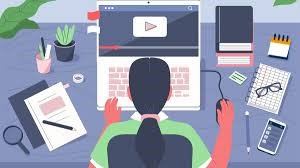
However, YouTube is not a substitute for your classroom. And here’s why:
- It doesn’t respond to you: You can’t say, “Ma’am, I didn’t understand the last part.” The video just goes on.
- It doesn’t know what you need: Your teacher does. They know if you struggle with map work or historical dates. Videos don’t.
- It might be inaccurate or off-topic: Not every video online follows your syllabus or explains concepts properly. Your teacher ensures everything taught is curriculum-based.
- It often simplifies or skips steps: Learning isn’t just about reaching the answer—it’s about understanding why and how. Teachers build that foundation. Videos often rush past it.
Learning Is More Than Information—It’s Transformation
Learning isn’t just collecting facts like coins. It’s about thinking, questioning, understanding, and applying knowledge to real life. And this type of learning requires:
- Contextual Teaching: A teacher connects lessons to your world. The French Revolution becomes more meaningful when linked to today’s democracy.
- Emotional Support: Struggling with confidence? An encouraging teacher can lift your spirits in ways no screen can.
- Skills Beyond the Subject: In a classroom, you learn teamwork through group work, respect through discussions, and leadership through class activities. These are life skills—not taught in videos.
- Assessment & Growth: Teachers track your progress, give feedback, and push you to improve. Videos can’t assess your weaknesses or guide your progress.
What Should You Do As a Student?
Here’s a balanced and smart approach to make the best of both worlds:
- Be Present in Class—Mind and Body
Don’t just attend class. Engage in it. Ask questions, participate in discussions, take notes, and reflect. Your teacher has years of experience in explaining things in way students understand. - Use YouTube as a Tool, Not a Teacher
It’s great for revising or listening to a different explanation—but don’t use it to replace your classroom learning. - Have Conversations with Your Teachers
Found a helpful video? Share it! Maybe your teacher can show it in class or give their view on it. Learning should always be collaborative. - Trust the Human Connection
Your teacher knows more than the subject—they know you. They understand when you’re anxious, distracted, or excited. That emotional understanding can’t be programmed into a video.
Final Thoughts: Choose Deep Learning over Easy Watching
We, your teachers, are not against technology. We are not against YouTube. In fact, many of us use online resources to enhance our lessons. But we want you to understand that real learning takes effort, time, and guidance.
A 5-minute video may seem easier than a 40-minute class, but don’t mistake ease for effectiveness. Education is not a race to finish a topic—it’s a journey to understand, explore, and grow.
So the next time you’re tempted to zone out in class thinking, “I’ll just watch a video later,” remember this:
A YouTube video might show you the topic. But only your teacher can help you truly learn it.
Sindhu Nair
Social Science Department